
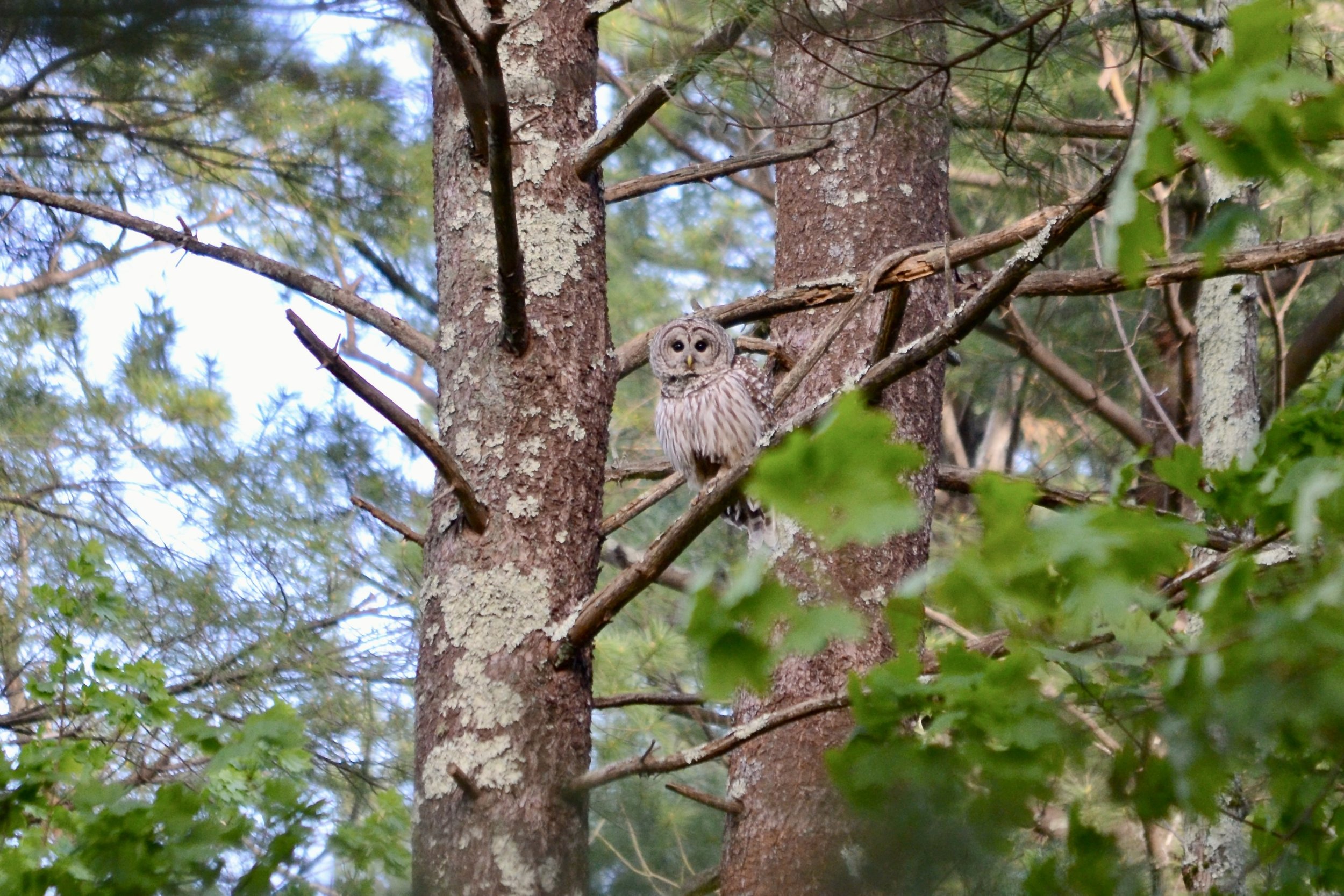
Help us protect the beautiful wildlife in Lincoln. Let’s end the use of Anticoagulant Rodenticides (ARs)that cause harm to non-target wildlife.
Raptors, foxes, coyotes, and other predators keep our ecosystems in balance. But rodent poisons—specifically first and second-generation anticoagulant rodenticides (ARs)—harm thousands of these creatures in Massachusetts each year after they eat poisoned rodents. SGARs can also harm children and pets who eat the poison itself.
Save Lincoln Wildlife has submitted a Citizen Petition to ban the use of these toxic ARs in Lincoln.
Vote “Yes”for Article X at Town Meeting-Saturday March 28, 2026.
Article X: Citizen Petition to Ban Anticoagulant Rodenticides (ARs) in Lincoln, MA
To determine whether the Town will authorize the Select Board to petition the General Court for special legislation substantially in the form below:
That notwithstanding chapter 132B of the general laws or any other general or special law to the contrary, the Town of Lincoln may by ordinance prohibit the application anticoagulant rodenticides within the Town of Lincoln, including application of such pesticides by licensed commercial applicators as defined in C.M.R. 333 10.00. except as allowed by the Board of Health to remediate a public health condition; this act shall take effect upon its passage.
Article X Explanation
This article would authorize the Select Board to petition the State Legislature for special legislation authorizing the Town to ban both the use of second-generation anticoagulant rodenticides and first generation anticoagulant rodenticides (ARs) (on both public and private property. The use of ARs presents a serious risk to both wildlife and domestic animals in Lincoln. ARs are highly toxic, and their impact goes far beyond the targeted rodents. Non-target animals including birds of prey, wild mammals, pets, and even young children are often unintentionally exposed to these poisons through ingestion of poisoned rodents or contaminated carcasses or accidental consumption of ARs themselves. Numerous published scientific studies have found that wildlife such as owls, hawks, coyotes, and foxes, which are crucial for controlling rodent populations naturally, can suffer fatal consequences when they consume rodents that have ingested ARs. Rodents who have consumed ARs can often live for several days after poisoning, making them easy prey for unsuspecting predators.
There are viable alternatives to ARs that are both effective and safer for the community. For example, Management at Lincoln Woods and their pest-control company switched from using ARs to RatX, which does not make its way up the food chain. Our public school uses Integrated pest management strategies, such as rodent-proofing buildings, maintaining a clean environment, and setting snap traps, also can control rodent populations without resorting to dangerous poisons.
In taking the proposed action, the Town would encourage the adoption of safer, more sustainable practices and align itself with other progressive municipalities across the state that are taking action to reduce the harmful effects of these chemicals. A ban on use of ARs would send a clear message that we are committed to creating a safe and responsible environment for both our people and the animals with whom we share it, fostering a healthier, more balanced relationship between humans and the natural world.
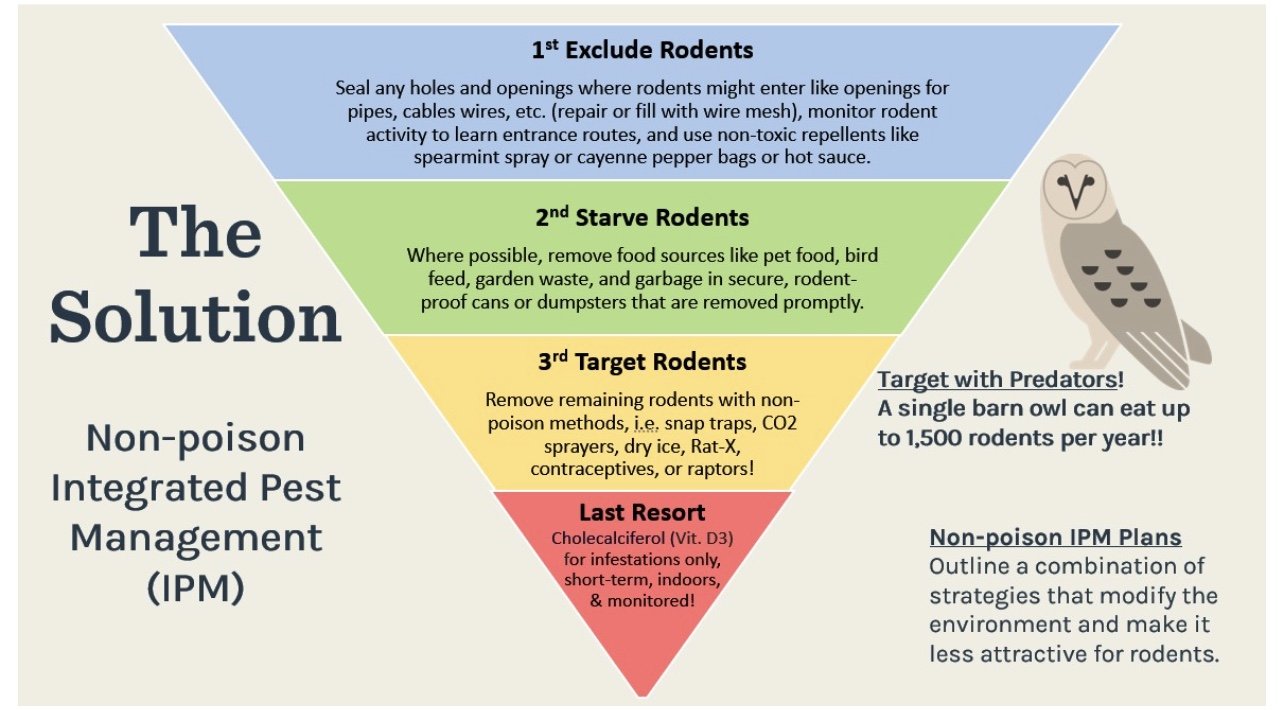
The only way to permanently keep rodents out of an indoor space is through a process called integrated pest management—a combined approach of removing food sources, closing access routes, and killing or removing any remaining rodents.
What alternatives to ARs can you and others in Lincoln use?
How ARs Poison our Wildlife and Communities
Although pest control professionals use ARs to target mice and rats, these deadly poisons move throughout the food chain, with destructive consequences to the entire ecosystem.
ARs work slowly, so after ingesting bait, a rodent may live for several days, during which time it becomes more vulnerable to predators and scavengers. When a predator eats a poisoned rodent, ARs pass into its own organs in a process known as “secondary poisoning.” Just like a rodent that has ingested ARs, a predator that consumes enough poisoned rodents will develop serious internal bleeding, leading to serious illness or death.
In recent years, researchers have documented an alarming number of predators sickened and killed byARS. Veterinarians at the New England Wildlife Centers report treating hundreds of poisoned raptors, foxes, and coyotes each year.

Carrie Stamos and Staci Montori met with Senator Barrett to get his support on a Statewide Ban of ARs.SAVE LINCOLN WILDLIFE Milestones and Successes!
Fall 2024: Municipal officials confirmed that no ARs are used on municipal property.
Winter 2024/2025: A town-wide survey identified locations using bait boxes on educational, commercial, and multi-family properties.
Spring 2025: Co-hosted a Save MetroWest Rescue Raptor event with over 80 attendees from Lincoln, Concord, Sudbury, Weston, and Waltham.
2025: Tabling at both town meeting and SOTT and the transfer station
Spring 2025: Donelan’s switched from using ARs to safer products
Summer 2025- MA lobbying day at State House- Save Lincoln Wildlife members met with our legislators to discuss a State Wide ban on ARs.
Fall 2025: Launch an educational campaign for town residents, businesses, and property owners in collaboration with the Lincoln Board of Health.
Fall 2025 Lincoln Woods switched from ARs to safer product ( Rat X)
Winter 2026- Submitted Citizen Petition to Town to Ban ARs in Lincoln
Upcoming Events
Join us to learn more about our group and ways you can help.
Save Lincoln Wildlife Zoom Monday Feb 2 @12 pm.
(Same Zoom link everyone month)
https://zoom.us/j/97599434908?pwd=MzcrU2xrcjExY2p1SldaWDJGM01Xdz09
Dial by your location
+1 646 876 9923 US (New York)
Meeting ID: 975 9943 4908
Passcode: 584747